Top Robotics Companies in Singapore

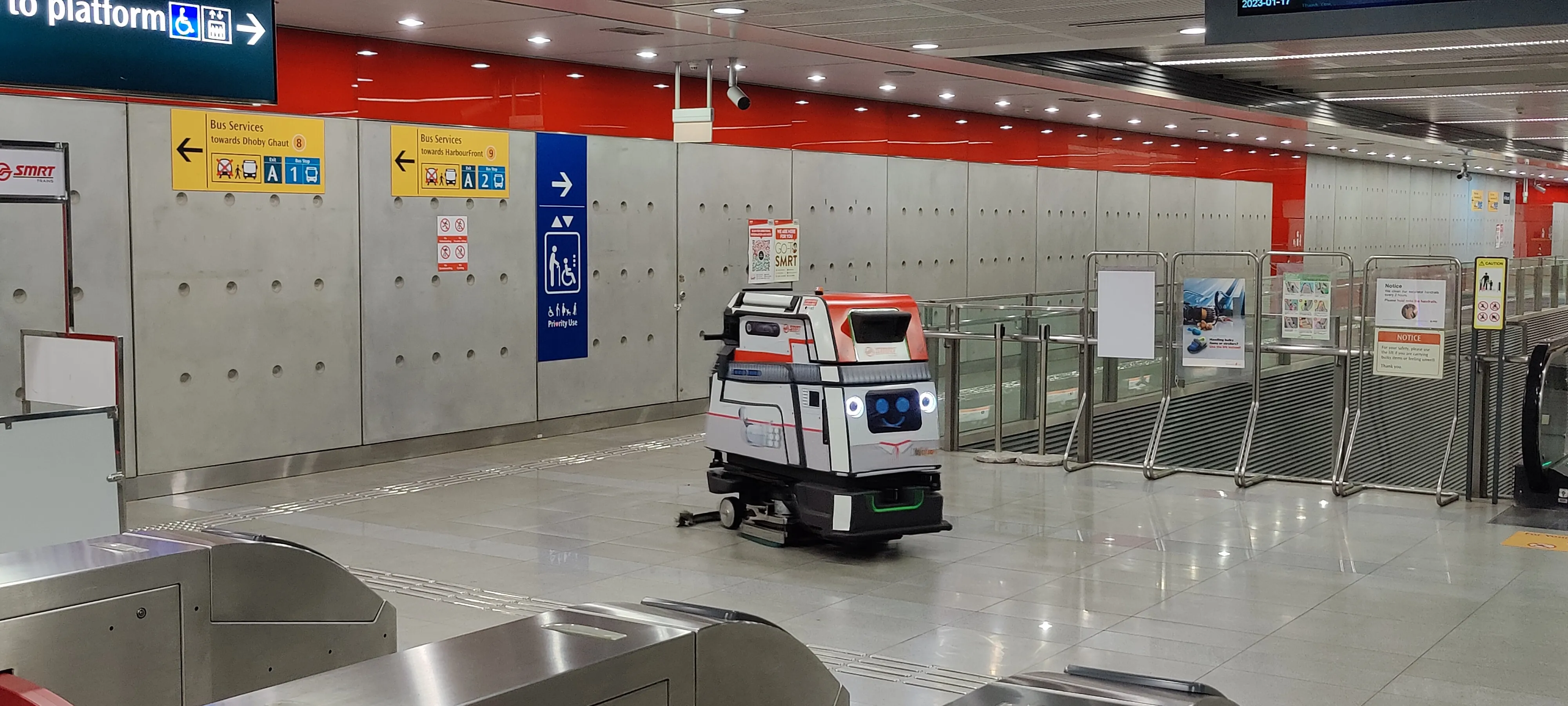
Singapore’s robotics sector is accelerating. Fresh funding, CES awards, and a government pushing embodied AI innovation. Companies are hiring.
Methodology note: The companies below are selected based on Innovation Impact (patents, R&D investment, unique technology) and Reputation/Influence (awards, media coverage, thought leadership)—not just directory listings.
Searching recommended jobs...
Singapore’s Robotics Ecosystem in Context
Singapore’s rise as a robotics hub isn’t accidental. It’s deliberate policy.
In March 2025, the National Robotics Programme launched RoboNexus—an initiative to accelerate robotics startups with global access, mentorship, and industry partnerships (A*STAR). The government’s National Robotics Programme actively supports embodied AI development.
Corporate investment follows. ST Engineering committed S$250 million to AI and robotics in September 2025, with plans to upskill 4,000 engineers (Business Times).
Globally, robotics startups raised over $6 billion in the first seven months of 2025—on pace to exceed 2024’s $6.1 billion total (The AI Insider). Singapore is capturing a meaningful share of that momentum.
The advantage: strong government support, world-class research institutions (NUS, NTU), business-friendly regulations, and high demand for automation across manufacturing, logistics, healthcare, and defense.
Companies to Watch: Recently Funded & Award-Winning
These are the companies making moves right now—the ones stale directories miss.
Cortex AI - $6M Seed (December 2025)
Cortex AI addresses robotics’ biggest bottleneck: real-world data for training robots.
Founded by Lucas Ngoo (co-founder and former CTO of Carousell, the $1B+ marketplace), Cortex AI exited stealth mode in December 2025 with Y Combinator backing and a $6 million seed round (reported by Tech in Asia).
What they do: Their platform matches physical workplaces with robotics-focused AI labs, collecting large-scale real-world data for general-purpose robotics training.
Why it matters: Robotics can’t advance without data. Cortex AI is building the infrastructure to collect it.
Sharpa - CES 2026 Innovation Award Winner
Sharpa won the CES 2026 Innovation Award in Robotics for their SharpaWave robotic hand—a breakthrough in dexterous manipulation (Sharpa).
The tech: 22 active degrees of freedom (1:1 human scale), proprietary CraftNet VTLA model, vision-based tactile sensing. The robot hand is now in mass production.
Sharpa demonstrated autonomous fine manipulation at CES 2026, proving the technology works beyond lab conditions. General-purpose robotics needs hands that can actually manipulate objects. Sharpa is delivering.
Botsync - Additional Series A (January 2026)
Botsync develops Autonomous Mobile Robots (AMRs) for industrial applications. In January 2026, they secured additional Series A funding from SGInnovate (Singapore’s deep-tech investor) (Robotics Tomorrow).
The momentum: 240% growth in production trips and 230% revenue growth in 2025.
What they do: Industrial AMRs for warehouses, factories, and logistics—reducing labor-intensive tasks in goods transport.
Venti Technologies - $28.8M Funding
Venti Technologies operates autonomous vehicles for warehouses, ports, rail yards, airports, and factories. Founded by an MIT team and based in Singapore and Boston (Venti Technologies).
The track record: 600,000+ km logged, 230,000+ containers moved in mixed human-robot traffic, 24/7 operation without safety drivers.
The impact: Up to 70% reduction in labor costs, 25% boost in productivity.
Recognition: Named one of Fast Company’s ten most innovative companies in Asia-Pacific (April 2025) (Safar Partners).
Menlo AI - Open-Source Humanoid Robot
Menlo Research describes itself as “an open AI & Robots lab that builds the brains for robots” (Menlo). Their flagship project: Asimov, an open-source humanoid robot platform.
The progress: Built humanoid robot legs. The robot is now walking with imitation data running on motors. They’re building every layer—structural frames, electromechanical assemblies, power systems.
Day 130 of building Asimov, an open-source humanoid
byu/eck72 inosrobotics
The angle: Open-source humanoid robotics. Most companies guard their IP. Menlo is building in public, with active GitHub repositories and presentations at Singapore Demo Nights (January 2026) alongside OpenAI.
Major Employers: Where to Build Your Career
These are the established players hiring now—stability plus growth equals career opportunities.
Nanyang Technological University (NTU)
NTU isn’t just a university—it’s one of Singapore’s most actively hiring robotics institutions. Explore opportunities on our platform.
The labs:
- BOT Lab: Biomedical robotics and mechatronics
- Algorithmic Robotics Group (ARG): Broad robotics research
- DISC Lab: Computer Vision, ML & Robotics for digitalization (NTU)
The roles: Research Assistant, Research Associate, Research Fellow across robotics, mechatronics, perception, embodied AI.
Why it matters: Academia is where cutting-edge robotics happens. For researchers, NTU offers access to world-class facilities and funding.
Dyson
Dyson’s S$587 million Singapore Technology Centre (opened 2017) focuses on robotics engineering, motors, sensors, navigation systems, and AI software (TechCrunch). Their global headquarters opened at St James Power Station in 2022 with a S$1.5 billion investment commitment (Today).
The focus: Advanced manufacturing, next-generation batteries (Tuas facility), hardware-software integration.
Why it matters: Multinational R&D presence means career stability and global mobility opportunities.
ST Engineering
ST Engineering is a Singapore-based multinational with 15,473 employees and a massive S$250M investment in AI and robotics (September 2025) (Business Times; BuiltIn Singapore).
The products: Security robotics, autonomous mobile robots for hospitals/logistics, fleet learning autonomous vehicles, AUTONOMAST (manned-to-unmanned vessel conversion), and exploration of robot dogs (Vision 60) for defense applications.
The opportunity: Upskilling 4,000 engineers means internal growth opportunities.
Public Service Division
Singapore’s government is actively adopting robotics for public services. The Public Service Division is actively hiring for robotics roles across government agencies—explore opportunities on our platform.
What this signals: National-level commitment to robotics deployment across healthcare, transportation, and public infrastructure.
Sector Breakdown: Companies by Specialty
Industrial & Manufacturing Automation
ST Engineering (covered above) - Defense, security, logistics robotics
Botsync (covered above) - Industrial AMRs, 230% revenue growth
CTRL Robotics - Fleet management solutions enabling automation setup in 5 minutes or less (BuiltIn Singapore)
KABAM Robotics - Autonomous mobile robots for warehouses, factories, distribution centers (The Singapore Blog)
FJ Dynamics - Agriculture, construction, and surveying robotics with operations in Singapore, US, Sweden, and China (BuiltIn Singapore)
ReachBots Automation - Modular robots for tight or difficult-to-reach spaces (Callbox)
Healthcare & Rehabilitation Robotics
Sharpa (covered above) - CES 2026 winner, robotic hand with 22 degrees of freedom
Roceso Technologies - Rehabilitation and assistive robotics, robotic exoskeletons for stroke/neurological recovery (The Singapore Blog)
OTSAW - Healthcare operations robotics (OTSAW)
EndoMaster - Medical robotics focus
Cleaning & Facility Management
LionsBot - Autonomous floor-cleaning machines, won Interclean Amsterdam Innovation Award 2020, LionsOS proprietary cloud OS (BuiltIn Singapore)
CenoBots - World’s first spot cleaning robot “Spot-Cleaner 50” (BuiltIn Singapore)
Gaussian Robotics - Autonomous floor cleaning robots, subsidiary of SIMPPLE Ltd. (NASDAQ:SPPL), 83 employees (BuiltIn Singapore)
Crown Digital - F&B robotics, developed “Ella” robot for food and beverage industry, 28 employees (BuiltIn Singapore)
Drones & Aerial Robotics
Avetics Global - End-to-end drone services for industrial applications (BuiltIn Singapore)
Infinium Robotics - Autonomous aerial logistics and drone delivery systems for urban and maritime environments (The Singapore Blog)
H3 Dynamics - Unmanned aviation building blocks, presence in Singapore, Austin, and Toulouse, France (BuiltIn Singapore)
Airseekers Robotics - Consumer robotics, raised $14M in funding
Enabling Technologies & Software
Movel AI - AI-powered navigation and perception software enabling robots to operate in dynamic, human-populated environments without fixed infrastructure (The Singapore Blog)
Doodle Labs - Industrial-grade wireless networking (mesh networking) for robotic systems, Helix Mesh Rider Radio is Blue UAS program’s datalink choice (BuiltIn Singapore)
Augmentus - No-code programming platform for robotics deployment
HiveBotics - Modular and swarm robotics systems inspired by natural hive behavior (The Singapore Blog)
Autonomous Vehicles & Logistics
Venti Technologies (covered above) - AVs for warehouses, ports, airports
BeeX - Autonomous robotics for underwater infrastructure in maritime, energy, defense sectors, reducing over 90% of carbon emissions (BuiltIn Singapore)
Career Insights for Robotics Job Seekers
Skills in Demand
Based on our analysis of Singapore robotics job postings, the most frequently requested skills include:
Technical:
- ROS (Robot Operating System)
- Python, C++
- Computer Vision (OpenCV)
- Machine Learning / Deep Learning
- SLAM (Simultaneous Localization and Mapping)
- Path planning algorithms
Domain-specific:
- Industrial automation experience
- Medical device knowledge (for healthcare robotics)
- Maritime/underwater systems (for companies like BeeX)
This analysis reflects general industry observation, not proprietary skill extraction from our database.
How to Break In
1. Target research institutions: NTU actively hires researchers at various experience levels.
2. Look at recently funded companies: Cortex AI, Botsync, Sharpa—fresh funding means hiring.
3. Consider adjacent roles: Many robotics companies hire for embedded systems, computer vision, and ML engineering—transferable skills from software engineering.
4. Build hands-on experience: Personal projects, ROS contributions, or academic research demonstrate practical capability.
Compensation Context
Robotics compensation in Singapore varies by experience level and company type. According to JobStreet and PayScale data, typical monthly ranges are S$4,500-5,500 for robotics engineers, with average annual base salaries around S$54,961.
Specific roles and companies will vary—research positions at NTU may offer different structures compared to industry roles at Dyson or ST Engineering.
Frequently Asked Questions
What are the top robotics companies in Singapore?
Is Singapore good for robotics careers?
What skills are needed for robotics jobs in Singapore?
How do I break into the robotics industry in Singapore?
What’s Next for Singapore Robotics
Singapore’s robotics ecosystem is accelerating. Government initiatives like RoboNexus and the National Robotics Programme are creating structural support. Fresh funding (Cortex AI $6M, Botsync Series A, Venti $28.8M) signals investor confidence. Global recognition (Sharpa CES award, Venti Fast Company) proves Singapore companies can compete.
For job seekers: Opportunities are distributed across research institutions (NTU), multinationals (Dyson, ST Engineering), and startups (Menlo, Sharpa, Cortex AI).
The edge: Unlike other tech hubs where housing costs and visa issues create friction, Singapore offers government-backed support, clear regulatory frameworks, and a strategic position in Southeast Asia’s growing robotics market.
Share this guide on
Article by

Robotics Platform Engineer at Menlo Research (menlo.ai) and founder of CareersInRobotics.com, where he analyzes thousands of robotics job postings to identify salary trends, skill demands, and hiring patterns.