7 Most In-Demand Robot Simulation Software Tools (2026 Job Data)

Introduction
We analyzed 3,113 active robotics jobs as of late January 2026 to identify which simulation tools employers actually hire for.
606 jobs (19.5%) explicitly mention simulation software requirements. Within those positions, we identified specific tools employers demand, analyzed salary data from 86 disclosed positions, and mapped which tools appear together in job postings.
Which Software is Used in Robotics?
Seven simulation tools dominate the job market, accounting for nearly all simulation-related hiring:
| Tool | Active Jobs | Median Salary | Pricing | Best For |
|---|---|---|---|---|
| NVIDIA Isaac Sim | 112 | $185,000 | Free (open-source) | AI robotics, senior roles |
| Gazebo | 78 | $185,000 | Free (open-source) | ROS development, broad adoption |
| MuJoCo | 73 | $190,000 | Free (open-source) | Research, ML engineering |
| Simulink | 45 | $171,975 | ~$2,000+/year | Controls, aerospace |
| Unreal Engine | 26 | $187,500 | Free (personal) | Photorealistic perception |
| Unity | 22 | $183,375 | Free (personal) | Accessible prototyping |
| NVIDIA Omniverse | 19 | $238,288 | Free (creators) | Digital twins, enterprise |
Key finding: Isaac Sim leads with 112 positions—nearly 50% more than its closest competitor. The right tool depends on your experience level, target industry, and role.
Rankings reflect active job counts from our January 2026 dataset. Salary data comes from 86 positions with disclosed compensation. Some breakdowns have smaller samples that we’ll note where relevant.
#1 - NVIDIA Isaac Sim: The Industry Leader
112 active jobs (18.5% of simulation positions) | $185,000 median salary
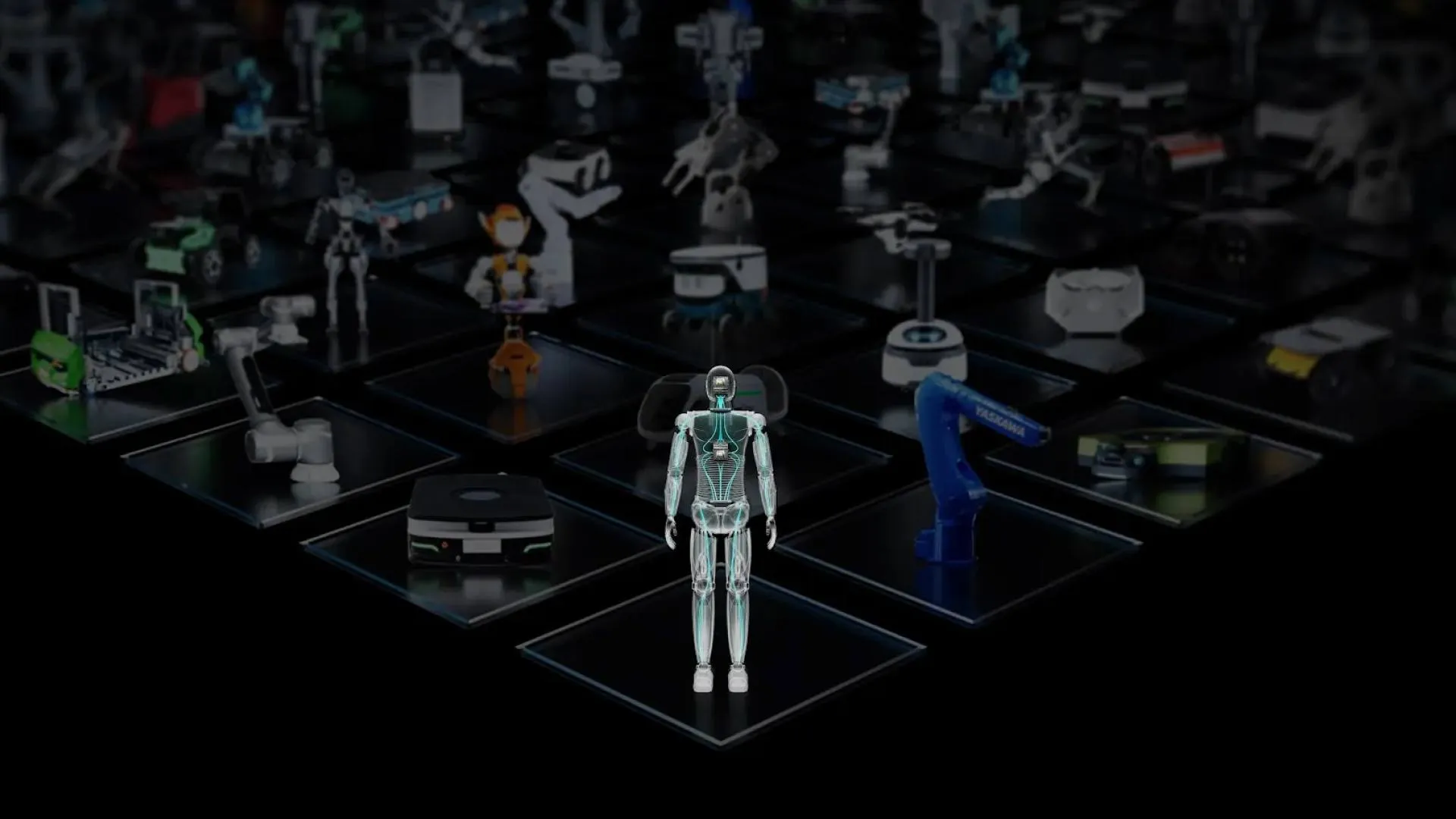
Isaac Sim dominates the robotics simulation job market with 112 positions—representing not just 18.5% of simulation-related hiring, but 3.6% of the entire robotics job market we analyzed. When you see postings from NVIDIA (23 positions), Analog Devices (10), or Amazon (8), Isaac Sim appears more often than not.
Why Companies Choose Isaac Sim
Built on NVIDIA Omniverse with GPU-accelerated physics and photorealistic rendering, Isaac Sim trains AI systems that transfer reliably to real hardware. The tool went open-source under Apache 2.0 in 2025 (Isaac Sim 5.0).
The real competitive advantage comes from ecosystem integration—Isaac Sim connects seamlessly to Jetson edge deployment, ROS 2 workflows, and synthetic data pipelines that feed ML training. Research scientists particularly favor it: 73.7% of research scientist simulation jobs (28 of 38 positions) mention Isaac Sim specifically.
Industry Concentration
Isaac Sim dominates specific verticals where AI-driven robotics are advancing rapidly:
- Robotics AI & Software: 68.4% of industry’s 114 simulation jobs
- Logistics & Warehousing: 75% of industry’s 12 simulation jobs
- Industrial Manufacturing: 53.8% of industry’s 13 simulation jobs
If you’re targeting autonomous vehicles, humanoid robotics, or warehouse automation, Isaac Sim skills become essential at senior levels.
The Career Progression Reality
Here’s what the seniority data reveals, though note the sample sizes: among 280 simulation jobs with seniority information, Isaac Sim appears in 56% of junior positions (14 of 25 jobs) and grows to 80% at lead+ level (24 of 30 jobs). While these samples are smaller, the progression aligns with the technical reality—Isaac Sim requires understanding GPU acceleration, USD workflows, and often ROS 2 integration.
Tool combinations matter: 59 Isaac Sim positions (53%) also require MuJoCo, and 51 positions (46%) want Gazebo skills. You’re rarely hired to use Isaac Sim in isolation—companies expect you to understand the full simulation stack.
Is NVIDIA Isaac Sim Free?
Yes—Isaac Sim is completely free and open-source under Apache 2.0 license. However, you’ll need substantial GPU hardware: RTX 5080 (16GB VRAM) minimum recommended for realistic workflows, with RTX 6000 Ada (48GB) preferred for large scenes. The software is free, but the hardware investment is significant.
Career Path Recommendation
Isaac Sim offers maximum job opportunities (112 positions), but it’s not a starting point. Build your foundation with Gazebo for 2-3 months, then transition to Isaac Sim. The 46% overlap in job postings suggests employers expect this progression—Gazebo teaches simulation fundamentals, Isaac Sim provides the advanced tools for production work.
Searching recommended jobs...
#2 - Gazebo: The Accessible Foundation
78 active jobs (12.9% of simulation positions) | $185,000 median salary
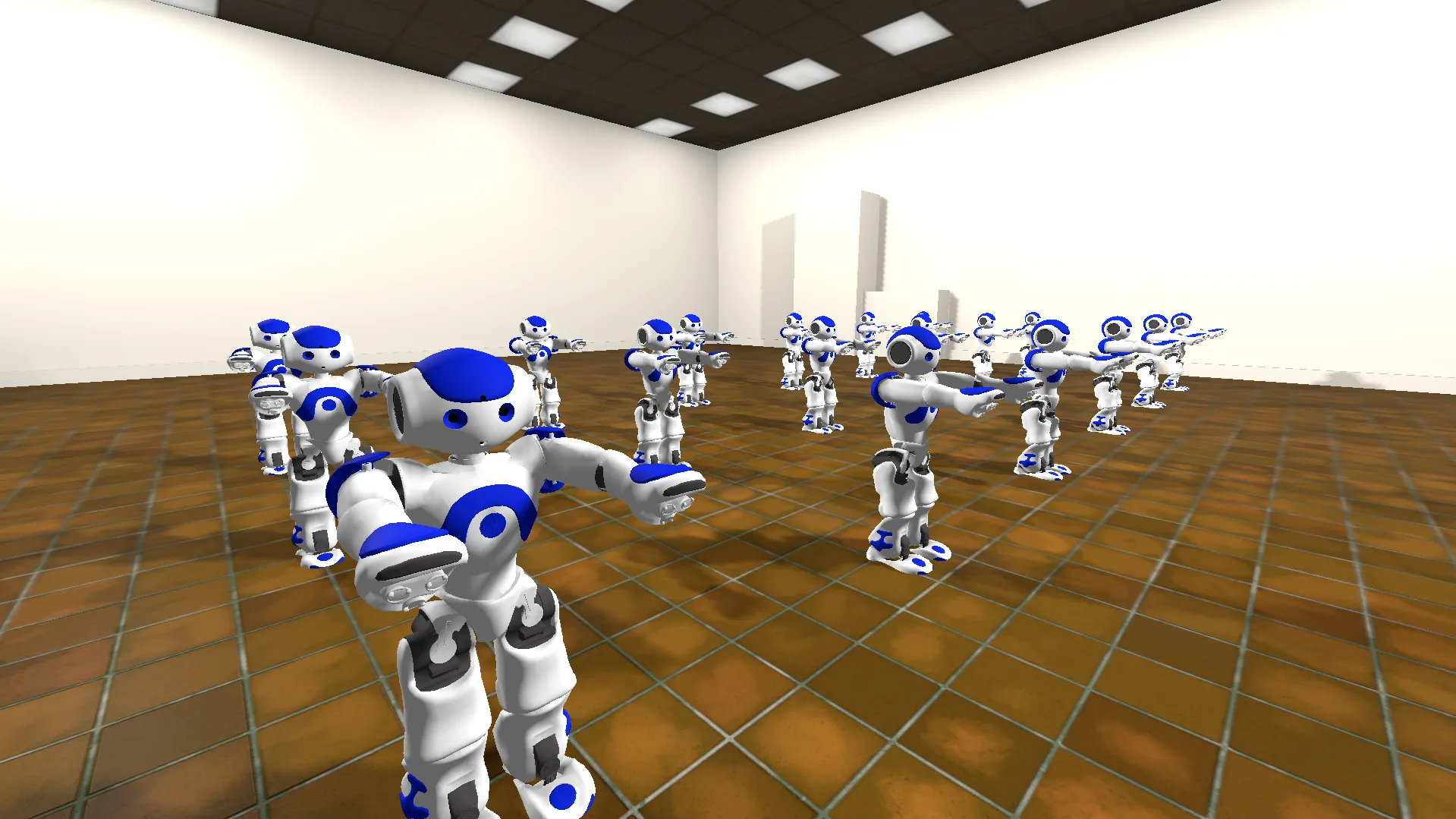
Gazebo’s 78 positions represent 12.9% of simulation-related hiring. While it trails Isaac Sim in total job count, Gazebo serves a critical role as the standard entry point to robotics simulation—not because of weak statistical claims, but because of fundamental technical accessibility.
Why Gazebo is the Starting Point
Gazebo has been the ROS ecosystem’s standard simulator since 2006. It’s completely free (Apache 2.0), runs on consumer hardware, and integrates natively with ROS/ROS 2 through the ros_gz_bridge. Unlike GPU-accelerated alternatives requiring RTX 5080+ GPUs, you can be productive in Gazebo on a laptop:
- Native ROS 2 support for Humble, Jazzy, and Rolling distributions
- Free Gazebo Fuel repository with pre-built robot models
- 16+ years of documentation and active community forums
- Lower hardware barrier - runs on consumer hardware without dedicated GPU
This accessibility makes it the de facto learning tool across the industry. You can be running basic simulations within days, not months.
Where Gazebo Dominates
Motion planning engineers favor Gazebo heavily: 62.5% of 24 motion planning simulation jobs mention it. Traditional robotics engineers show 54.7% adoption (29 of 53 jobs). Industry-wise, Gazebo demonstrates broad applicability:
- Transportation & Autonomous Vehicles: 40% (8 of 20 industry jobs)
- System Integration: 50% (4 of 8 industry jobs)
- Strong presence across European markets
The Career Progression Pattern
51 Gazebo positions (65%) also require Isaac Sim knowledge. This reflects the expected progression: learn Gazebo to prove fundamentals, then advance to Isaac Sim for senior work.
Gazebo maintains relevance throughout careers, appearing in jobs at every seniority level. It remains useful for ROS integration, rapid prototyping, and specific simulation tasks even at senior levels.
Searching recommended jobs...
#3 - MuJoCo: The Research Standard
73 active jobs (12.0% of simulation positions) | $190,000 median salary
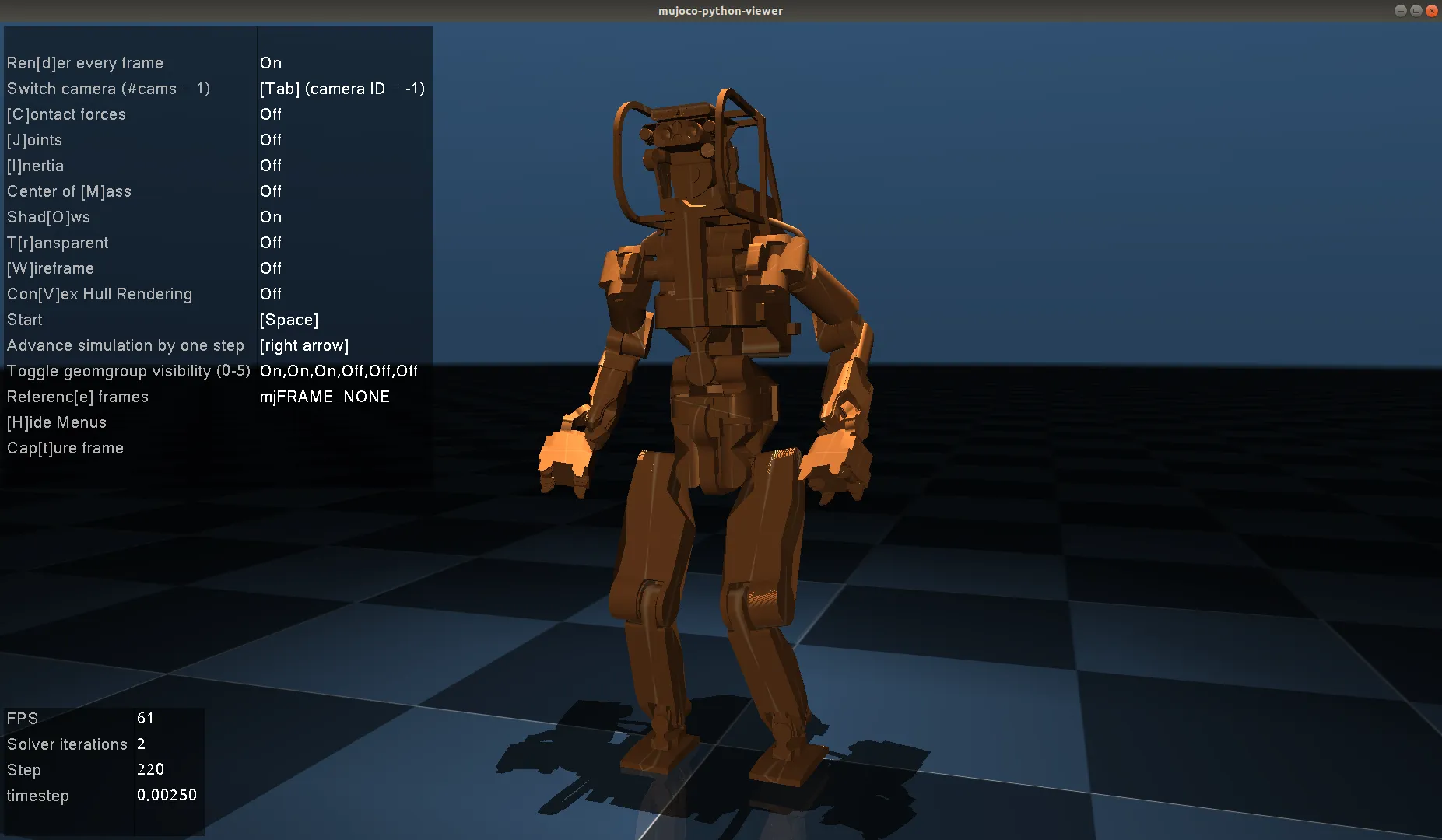
MuJoCo commands the highest median salary of commonly-used simulators at $190,000, tied only with Omniverse (which has far fewer positions). The 73 job count is substantial, but MuJoCo occupies a unique niche that makes it essential only for specific career paths.
What Makes MuJoCo Different
Unlike Isaac Sim or Gazebo, MuJoCo is a physics engine for contact-rich manipulation and biomechanics, not a complete simulation environment. MuJoCo uses convex optimization for contact dynamics, guaranteeing unique solutions at exceptional speed (~650K steps/sec on Apple M4 Max).
Since DeepMind open-sourced it in October 2022, MuJoCo has become the dominant platform for reinforcement learning research. The MJX variant (JAX-based) pushes performance further, enabling GPU/TPU acceleration at ~2.7M steps/sec on 8-chip TPU v5.
The Research Connection
Job distribution confirms MuJoCo’s research focus:
- Research & Academia: 66.7% of industry’s 15 simulation jobs mention MuJoCo
- Research Scientists: 65.8% of role’s 38 simulation jobs
- ML Engineers: 50% of role’s 46 simulation jobs
Compare this to traditional robotics engineers (28.3%) or systems integration engineers (12.5%)—MuJoCo skews heavily toward research and ML roles.
This research orientation explains the salary premium. Companies hiring for MuJoCo skills typically seek ML engineers or research scientists working on novel control algorithms, RL-based manipulation, or biomechanics—roles that command higher compensation.
The Isaac Sim Partnership
59 MuJoCo positions (81%) also require Isaac Sim experience—the highest co-occurrence of any tool pairing. The typical workflow: Isaac Sim for photorealistic sensor simulation, MuJoCo for fast physics rollouts during RL training.
You rarely get hired to use MuJoCo alone. It’s part of a research stack alongside Isaac Sim, JAX/Python, and domain-specific frameworks. Top employers like NVIDIA (14 MuJoCo positions), Medra (3), and AI Robot Association (3) expect this combined expertise.
Career Positioning
MuJoCo is a specialization tool, not a starting point. If you’re targeting PhD-level research positions, autonomous manipulation, or humanoid control, MuJoCo becomes essential. For traditional robotics engineering or systems integration, it remains optional.
Add MuJoCo mid-career as you specialize in research or ML engineering—after you’ve mastered Isaac Sim and understand the problem space where MuJoCo’s speed and precision matter.
Searching recommended jobs...
#4 - Simulink: The Controls Engineering Track
45 active jobs (7.4% of simulation positions) | $171,975 median salary
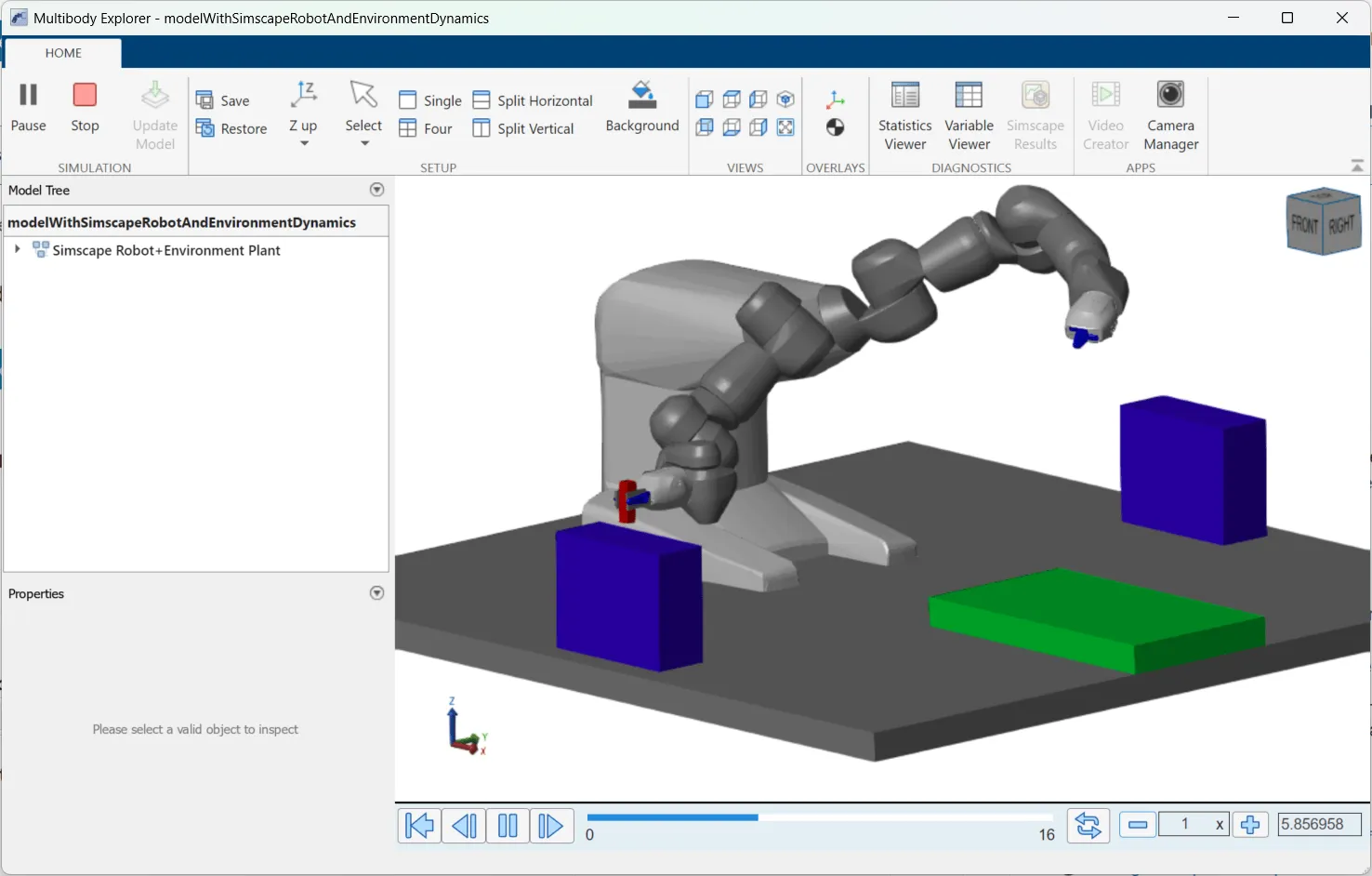
Simulink exists in a fundamentally different world than the tools above. While Isaac Sim, Gazebo, and MuJoCo form an interconnected ecosystem (with 41-81% overlap in job postings), Simulink stands alone with only 2% co-occurrence with other simulators. This isn’t a weakness—it’s a completely different career track.
The Controls Engineering Domain
Simulink dominates one specific role with striking clarity: 75% of controls engineers (15 of 20 simulation jobs) and 71.4% of embedded systems engineers (10 of 14 jobs) use Simulink. These aren’t the ML engineers or research scientists using Isaac Sim—they’re aerospace engineers, automotive controls specialists, and defense contractors building safety-critical systems.
Industry distribution confirms the split:
- Aerospace & Defense: 60.6% (20 of 33 industry simulation jobs)
- Automotive Manufacturing: 55.6% (5 of 9 industry jobs)
- Energy & Mining: 71.4% (5 of 7 industry jobs)
Companies like Blue Origin (3 positions, 100% Simulink), Oshkosh (2 positions), and other aerospace firms appear repeatedly. These organizations need DO-178C certification, ISO 26262 compliance, and model-based design workflows—not photorealistic rendering or RL training.
What You’re Actually Getting
Simulink isn’t just simulation software—it’s a complete model-based design environment:
- Embedded Coder for production C/C++ code generation
- Hardware-in-the-Loop (HIL) testing with real control hardware
- Simscape Multibody for 3D mechanical systems
- Stateflow for state machine logic
- Certification tooling for aerospace/automotive standards (DO-178C, ISO 26262, IEC 61508)
The pricing reflects this enterprise focus: starts ~$860/year for MATLAB, plus Simulink add-on and toolboxes (total typically $2,000-5,000+/year for professional use). Companies pay because it’s the certified standard for safety-critical systems.
Is MATLAB Used for Robotics?
Yes, but specifically through Simulink for controls-heavy applications. You’ll find it in aerospace robotics (drone control, spacecraft systems), automotive (ADAS, autonomous vehicle control layers), and industrial automation (PLCs, motion controllers). It’s far less common in AI-focused robotics startups or research labs where Isaac Sim and MuJoCo dominate.
The Career Fork
The 2% overlap statistic is crucial: choosing Simulink means choosing a different career path. You’re opting for traditional controls engineering over AI/ML robotics. Both paths pay well (though Simulink’s median is lowest at $172K), but they lead to fundamentally different roles and industries.
If you want to work on flight controllers, engine control units, or industrial motion systems, Simulink is your ecosystem. If you want to work on perception, autonomous navigation, or RL-based manipulation, you’ll rarely encounter it.
#5 - Unreal Engine: When Photorealism Matters
26 active jobs (4.3% of simulation positions) | $187,500 median salary
Unreal Engine appears in just 0.8% of all robotics positions, but fills a crucial niche: photorealistic sensor simulation for perception algorithms. The 26 positions skew toward senior and lead roles, suggesting this is a specialization you add mid-career rather than a foundational skill.
The Perception Use Case
Unreal’s game engine heritage delivers cinema-quality visuals through Nanite (micropolygon geometry) and Lumen (dynamic global illumination). This matters when training vision-based systems—synthetic data from Unreal can be photorealistic enough that ML models trained on it transfer successfully to real-world sensors.
Companies using Unreal for robotics typically need:
- High-fidelity camera sensor simulation
- LiDAR/radar modeling in realistic environments
- Synthetic data generation at scale for perception training
- Visualization of complex robotic systems for stakeholder presentations
Analog Devices (7 positions) and Anduril (3) show up repeatedly—companies focused on sensor-heavy autonomous systems.
The Game Engine Pairing
65% of Unreal Engine jobs (17 positions) also require Unity knowledge. These travel as a pair in hiring patterns. The typical workflow: Unity for rapid prototyping and initial ML-Agents RL training, then Unreal for high-fidelity sensor validation and final testing.
Both tools also show significant overlap with core robotics simulators: 58% mention Isaac Sim, 62% mention Gazebo. You’re not replacing traditional robotics simulation with game engines—you’re augmenting it for specific perception needs.
When to Learn Unreal
This is a specialization for perception engineers, not a general-purpose tool. The 26 job count suggests you can skip Unreal without significantly limiting career options—unless you’re specifically targeting computer vision, sensor fusion, or photorealistic synthetic data generation roles.
If those areas interest you, learn Unreal after mastering core simulation (Gazebo or Isaac Sim) and Unity (which has a gentler learning curve). Consider also exploring computer vision roles which heavily value these skills.
#6 - Unity: The Accessible Alternative
22 active jobs (3.6% of simulation positions) | $183,375 median salary
Unity represents the smallest major tool at 0.7% of robotics positions, serving as the accessible entry point to game-engine simulation. Think of it as “Unreal Engine Lite”—less powerful rendering, but significantly easier to learn and free for personal projects under $200K revenue.
Why Unity Exists in Robotics
Unity’s ML-Agents Toolkit makes it valuable for reinforcement learning prototyping, particularly for researchers or small teams without access to Isaac Sim infrastructure. Amazon (3 positions) and Anduril (3) use Unity alongside other simulators, typically for:
- Rapid prototyping and proof-of-concept work
- RL training with Unity’s ML-Agents framework
- Extensive Asset Store ecosystem (8,000+ free assets)
- Cross-platform visualization including WebGL for browser demos
- ROS-TCP-Connector for basic ROS integration
The 77% Unreal Overlap
77% of Unity positions (17 jobs) also require Unreal Engine knowledge—the highest bidirectional overlap in our dataset. This reveals the reality: companies rarely hire Unity-only specialists. They hire game-engine-familiar engineers who can use both tools depending on project needs.
Career Positioning
Unity works best as a stepping stone. Learn it if you want a gentler introduction to game-engine simulation before Unreal, you’re interested in ML-Agents for RL experimentation, or you need rapid prototyping for robotics visualization.
With only 22 positions, Unity alone won’t open many doors. But combined with Unreal and core robotics tools, it becomes part of a valuable perception-focused skill stack.
#7 - NVIDIA Omniverse: The Enterprise Specialist
19 active jobs (3.1% of simulation positions) | $238,288 median salary
Omniverse presents an extreme ratio: smallest job count, highest median salary by far. The $238K median is roughly $50K above Isaac Sim—revealing its nature as a specialized enterprise tool for advanced digital twin applications.
What Omniverse Actually Is
Omniverse isn’t a simulator you choose instead of Isaac Sim—Isaac Sim is built ON Omniverse. Think of Omniverse as “Google Docs for 3D”: a collaboration platform using Universal Scene Description (OpenUSD) to connect Maya, Blender, CAD tools, and simulation software in real-time.
The 19 positions (7 at NVIDIA itself) typically require Omniverse for:
- Industrial digital twins connecting simulation to real factory operations (BMW, Siemens use cases)
- Multi-tool USD workflows for complex design and simulation pipelines
- Nucleus server infrastructure for distributed team collaboration
- Enterprise-scale Isaac Sim deployments
The $238K Question
Why does Omniverse command such a premium? The positions are overwhelmingly senior roles at large enterprises that already use Isaac Sim extensively. You’re not hired to learn Omniverse—you’re hired because you already know Isaac Sim deeply AND understand enterprise USD workflows, digital twin architecture, and cross-tool integration.
It’s a specialization on top of a specialization, which explains both the small market and the high compensation.
When Omniverse Matters
You’ll encounter Omniverse if you work at NVIDIA or NVIDIA partners on large-scale deployments, need industrial digital twin capabilities for manufacturing, require multi-tool CAD/simulation/rendering pipelines, or support enterprise teams using Isaac Sim at scale.
For most robotics engineers, Omniverse remains optional even at senior levels. But for those 19 highly specialized positions, it commands significant compensation.
Which Simulation Software Should You Learn?
Your career target determines which tools matter most.
If You’re New: Start with Gazebo
Start with Gazebo. It runs on consumer hardware, has native ROS integration, extensive documentation, and 78 active positions. Timeline: 2-3 months to competency.
Then transition to Isaac Sim. The 65% overlap in job postings (51 jobs mention both) reflects the expected progression.
If You Have Experience: Isaac Sim
Isaac Sim offers the most opportunities (112 positions). Timeline: 3-6 months for proficiency after building Gazebo foundation.
Role-Specific Paths
| Role | Primary Tool | Recommended Stack | Job Sample |
|---|---|---|---|
| Research Scientist | MuJoCo | Isaac Sim + MuJoCo + JAX/Python | Strong (65.8% of role, 38 jobs) |
| ML Engineer | MuJoCo | Isaac Sim + MuJoCo + RL frameworks | Strong (50% of role, 46 jobs) |
| Controls Engineer | Simulink | MATLAB + Simulink + Embedded Coder (separate track) | Moderate (75% of role, 20 jobs) |
| Robotics Engineer | Isaac Sim | Gazebo + Isaac Sim + ROS 2 | Strong (62.3% of role, 53 jobs) |
| Motion Planning Engineer | Isaac Sim/Gazebo | Gazebo + Isaac Sim + MuJoCo | Moderate (62.5% each, 24 jobs) |
Industry-Specific Strategies
| Industry | Primary Tool | Penetration Rate | Job Sample |
|---|---|---|---|
| Robotics AI & Software | Isaac Sim | 68.4% | 114 jobs (strong) |
| Aerospace & Defense | Simulink | 60.6% | 33 jobs (strong) |
| Research & Academia | MuJoCo | 66.7% | 15 jobs (moderate) |
| Logistics & Warehousing | Isaac Sim | 75% | 12 jobs (moderate) |
| Industrial Manufacturing | Isaac Sim / Simulink | 53.8% vs 30.8% | 13 jobs (moderate) |
The Multi-Tool Reality
The most important insight from our co-occurrence analysis: you don’t learn just one tool. The data shows:
- 53% of Isaac Sim jobs also want MuJoCo (59 positions)
- 81% of MuJoCo jobs also want Isaac Sim (59 positions)
- 65% of Gazebo jobs also want Isaac Sim (51 positions)
- 77% of Unity jobs also want Unreal (17 positions)
Build a stack aligned with your career path, not a single skill. Start with Gazebo, add Isaac Sim, then specialize—MuJoCo for research, Unity/Unreal for perception, or Simulink for controls.
Robotics Simulation Tools: Frequently Asked Questions
What is the best simulation software for robotics?
• Most job opportunities: Isaac Sim (112 jobs)
• Best starting point: Gazebo (accessible, ROS-integrated, 78 jobs)
• Highest salary: Omniverse ($238K median, but only 19 jobs)
• Research focus: MuJoCo (66.7% of research positions, 73 jobs)
• Controls engineering: Simulink (75% of controls roles, 45 jobs)
See comparison table above
What is the best free robot simulator?
The main paid option (Simulink at ~$860/year plus MATLAB license) serves a different market—aerospace and controls engineering rather than AI robotics.
Is NVIDIA Isaac Sim free?
Is Gazebo or Webots better?
Both are free and open-source, but Gazebo's deep ROS integration and larger job market make it the clear choice for career-focused learners.
Is MATLAB used for robotics?
However, it's far less common in AI-focused robotics startups or research labs where Isaac Sim and MuJoCo dominate. MATLAB/Simulink represents a separate career track—traditional controls engineering versus AI/ML robotics.
What is the difference between Isaac Sim and Isaac Lab?
Think of Isaac Lab as specialized RL training tools built on top of Isaac Sim's simulation capabilities. You use Isaac Sim to create the environment, then Isaac Lab provides the RL training infrastructure (benchmark tasks, PPO/SAC implementations, distributed training).
Which software is used in robotics?
1. NVIDIA Isaac Sim - 112 jobs, $185K median
2. Gazebo - 78 jobs, $185K median
3. MuJoCo - 73 jobs, $190K median
4. Simulink - 45 jobs, $172K median
5. Unreal Engine - 26 jobs, $188K median
6. Unity - 22 jobs, $183K median
7. NVIDIA Omniverse - 19 jobs, $238K median
These tools account for the vast majority of simulation-related hiring in robotics. See detailed breakdown above.
What about CoppeliaSim (formerly V-REP)?
Conclusion
Three distinct tracks exist: AI robotics (Gazebo → Isaac Sim → MuJoCo), traditional controls (Simulink), and perception (Unity → Unreal).
For newcomers: start with Gazebo (2-3 months), then specialize based on your goals.
You’re building a stack, not learning one tool. The co-occurrence data shows employers expect combinations—Isaac Sim + MuJoCo for research, Gazebo + Isaac Sim for general robotics, Unity + Unreal for perception.
Ready to put these skills to work? Browse simulation-related robotics jobs on CareersInRobotics.com to see which tools employers in your target industry are actually hiring for right now.
Share this guide on
Article by

Robotics Platform Engineer at Menlo Research (menlo.ai) and founder of CareersInRobotics.com, where he analyzes thousands of robotics job postings to identify salary trends, skill demands, and hiring patterns.